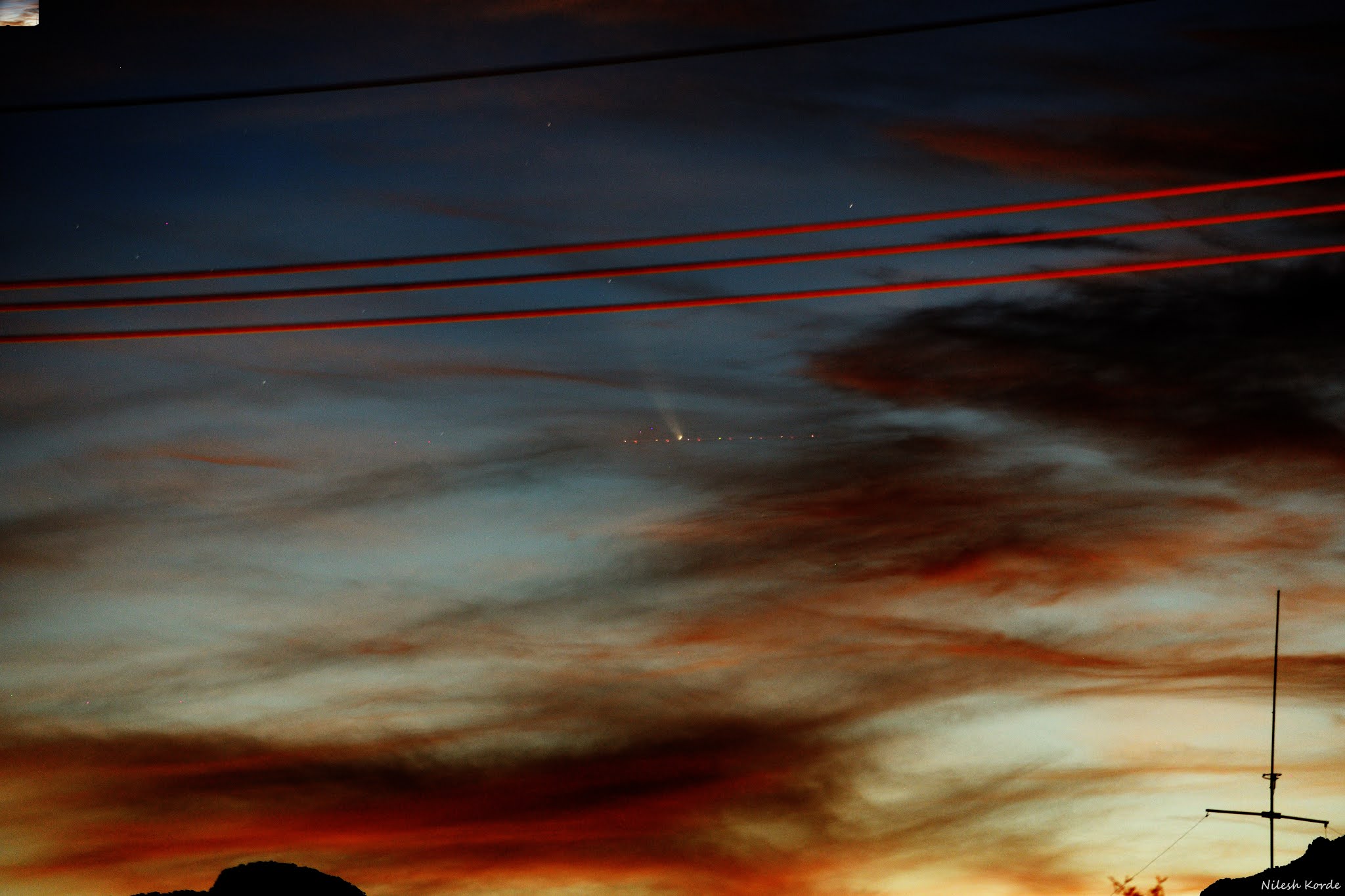
सध्या आकाशात साध्या डोळ्यांनी दिसणारा एक धुमकेतू आलेला आहे. या धुमकेतूचा शोध नुकताच काही महिन्यांपुर्वी लागला. जेव्हा शोध लागला तेव्हा हा धुमकेतू सुर्याकडे झेपावत होता. धुमकेतू आपल्या सुर्यमालेतील ग्रहांप्रमाणेच सुर्याभोवती प्रदक्षिणा घालतात.
काही धुमकेतूंची प्रदक्षिणा सुर्य ते गुरूग्रहाच्या आसपास असते. याप्रकारचे धुमकेतू सुर्याभोवती प्रदक्षिणा काही दशकांत पुर्ण करतात. प्रसिद्ध हॅलेचा धुमकेतू साधारण 76 वर्षांनी दिसतो.
Neowise (C/2020 F3) हा धुमकेतू मात्र काही हजार वर्षांत एक प्रदक्षिणा पुर्ण करेल. धुमकेतू नविनच असल्याने प्रदक्षिणेचा काल अजून पुर्णपणे निश्चित झालेला नसला तरी साधारण सात हजार वर्षांचा परिवनलकाल असावा असा सध्याचा अंदाज आहे.
आपल्या सुर्यमालेत अनेक धुमकेतू आहेत, पण डोळ्यांनी दिसतील असे फार थोडे धुमकेतू बघावयास मिळतात. म्हणूनच सध्या चर्चेत असलेला निओवाईज धुमकेतू पाहण्याची पर्वणी सोडू नये.
अनेकांनी हा धुमकेतू कसा पहावा असे मला विचारल्यामुळे मी ही एक छोटीशी पोस्ट लिहीण्याचे ठरविले. जेणेकरून मला प्रत्येकाला स्वतंत्र उत्तर द्यावे लागणार नाही.
पुढील दोन तीन दिवसांत, बहुतेक ठिकाणांहून (उत्तर गोलार्धात) धुमकेतू सुर्यास्तानंतर दिसू लागेल. निओवाईज आता सुर्यापासून लांब निघाल्याने हळूहळू फिका होत जाईल आणि डोळ्यांना दिसणे अवघड होत जाईल. पण तरी अजून दोन-तीन आठवडे तरी तो डोळ्यांनी दिसला नाही तरी दुर्बिणीतून दिसू शकेल आणि क्यामेर्यातही टिपता येईल असे वाटते.
खालील चित्रात (चित्र क्र.1) मी धुमकेतूचा मार्ग 14 जुलै 2020 ते 25 जुलै पर्यंतचा पिवळ्या रेघेने दाखवला आहे. चित्र साधारण सुर्यास्ताच्यानंतर 30 मिनीटांचा काळ दर्शवते. चित्रातील धुमकेतूची जागा हे अमेरिकेतील अरिझोना राज्य आहे. आकाशातील नक्षत्रांची जागा तुम्ही कुठून बघत आहात आणि कोणत्या वेळी बघत आहात यानुसार अर्थातच थोडीफार वेगळी असेल. मात्र जर नक्षत्रांच्या तुलनेत धुमकेतूची जागा कुठूनही बघितलीत तरी तीच असेल. सोपे पडावे म्हणून मी माझ्या जागेवरील चित्र काढले आहे. (चित्रावर क्लिक केल्यास मोठे चित्र दिसेल.)
खालील चित्रा सप्तर्षी (Ursa Major) नक्षत्र दिसत आहे. सप्तर्षी नक्षत्रातील बरेचसे तारे अनेक शहरांतील प्रकाशप्रदुषित (light pollution) आकाशातही दिसतात. धुमकेतू त्या नक्षत्रात असल्याने सप्तर्षीतील तार्यांचा वापर करून तो शोधता येईल.

चित्र क्र. 1- धुमकेतूचा मार्ग
सर्वप्रथम सप्तर्षी नक्षत्र शोधा. खालील दोन चित्रात (चित्र क्र. 2) सप्तर्षी नक्षत्र कसे शोधायचे ते दाखवले आहे. ध्रुवतारा जर दिसत असेल तर सप्तर्षी शोधणे सोपे जाते. पण ध्रुवतारा फिका असल्याने मोठा शहरांतून दिसेलच असे नाही.
सप्तर्षीच्या चोकोनाकृती तार्यातील दोन तार्यांकडून एक रेघ काढली तर ती ध्रुवतार्याच्या दिशेने जाते. या तार्यांचे नाव क्रतु (Dubhe) आणि पुलह (Merak). सप्तर्षी नक्षत्रातील Mizar म्हणजे वसिष्ठ अनेकांच्या ओळखीचा असतो.

चित्र क्र. 2- सप्तर्षी आणि ध्रुवतारा
एकदा सप्तर्षी नक्षत्र सापडले की साधारण अंतराचा अंदाज घेऊन धुमकेतू सहज शोधता येईल. चित्र क्रं 1 मधील तारखांवरून धुमकेतूचे सप्तर्षीतील तार्यांपासूनच्या अंतराजा अंदाज लावा आणि त्याजवळपास धुमकेतू दिसतो का पहा.
खालील चित्रात (चित्र क्रं 3) 18 जुलै च्या सुर्यास्तांतर धुमकेतू कुठे दिसेल हे (कॅलिफोर्निया प्रमाण वेळ) उदाहरण दाखवले आहे.
वसिष्ठ पासून पुलह (Meerak) वर रेघ काढून जर ती पुढे वाढवत न्हेली तर पुलह पासून धुमकेतू साधारण 20 अंश अंतरावर असेल.
सप्तर्षीतील इतर तारे दिसत असतील चित्र क्रं 1 चा वापर करून धुमकेतू शोधणे अगदीच सहज व्हावे.
चित्र क्र. 3- सप्तर्षी आणि ध्रुवतारा
अवकाशातील गोष्टींतील अंतर हाताने कसे मोजायचे ते खालील चित्रात दाखवले आहे.(चित्रे येथून साभार.)
उदा. हात लांब करून करंगळी समोर धरल्यास करंगळीची रुंदी साधारणपणे 1 अंश (डिग्री) इतके अवकाशातील अंतर दर्शवते.
उदा. हात लांब करून करंगळी समोर धरल्यास करंगळीची रुंदी साधारणपणे 1 अंश (डिग्री) इतके अवकाशातील अंतर दर्शवते.


इंटरनेटरवर धुमकेतू शोधण्यास अनेक पर्याय उपलब्ध आहेत. त्यापैकी Stellarium आण Heavens-above यांचा वापर तुम्ही करू शकता. Stellarium कंप्युटवर आणि फोन दोन्हीवर इन्स्टॉल करता येते.